📊 总览📊 Overview📊 개요
山西,古称"河东"、"山右",因太行山以西而得名。这片表里山河之间的土地,见证了华夏文明从蒙昧到辉煌的全过程。Shanxi, historically called "Hedong" (east of the Yellow River) or "Shanyou" (right of the mountains), is named for its location west of the Taihang Mountains. This land between mountains and rivers witnessed the entire journey of Chinese civilization.산시(山西)는 역사적으로 "하동(河東)" 또는 "산우(山右)"라 불렸으며, 태항산맥 서쪽에 위치하여 이름 붙여졌습니다. 이 산과 강 사이의 땅은 중화문명의 전 과정을 목격했습니다.
一、上古传说华夏文明的摇篮I. Ancient LegendsCradle of Chinese Civilization一. 상고 전설중화문명의 요람
🏛️ 尧都平阳(今临汾)🏛️ Yao's Capital Pingyang (modern Linfen)🏛️ 요도 평양 (현 린펀)
传说中尧帝的都城。临汾至今保留有尧庙、尧陵等遗迹。"平阳"这个名字,从传说时代一直沿用到明清,长达数千年。The legendary capital of Emperor Yao. Linfen still preserves the Temple and Mausoleum of Yao. The name "Pingyang" was used from the legendary era through the Ming-Qing dynasties — spanning millennia.전설 속 요(堯)제의 도성입니다. 린펀에는 지금도 요묘(堯廟)와 요릉(堯陵) 등 유적이 남아 있습니다. "평양(平陽)"이라는 이름은 전설 시대부터 명청 시대까지 수천 년간 사용되었습니다.
🏛️ 舜都蒲坂(今运城永济)🏛️ Shun's Capital Puban (modern Yongji, Yuncheng)🏛️ 순도 포판 (현 융지, 윈청)
传说中舜帝的都城。永济地处黄河拐弯处,水土丰饶,是远古先民理想的定居之地。The legendary capital of Emperor Shun. Yongji, located at the bend of the Yellow River, offered fertile land — an ideal settlement for ancient peoples.전설 속 순(舜)제의 도성입니다. 융지는 황하가 굽이치는 곳에 위치해 토지가 비옥하여 고대인들의 이상적인 정착지였습니다.
🏛️ 禹都安邑(今运城夏县)🏛️ Yu's Capital Anyi (modern Xiaxian, Yuncheng)🏛️ 우도 안읍 (현 하현, 윈청)
大禹建都之地。夏县之名即来源于夏朝。"安邑"后来成为魏国早期都城,历史地位极其重要。Where Yu the Great established his capital. Xiaxian (Xia County) is named after the Xia Dynasty. "Anyi" later became an early capital of the State of Wei — a place of immense historical significance.대우(大禹)가 도읍을 세운 곳입니다. 하현(夏縣)의 이름은 하(夏)나라에서 유래했습니다. "안읍"은 후에 위(魏)나라의 초기 도성이 되어 역사적으로 매우 중요한 곳입니다.
二、商周·春秋晋国称霸百年II. Shang-Zhou · Spring & AutumnJin's Century of Hegemony二. 상주·춘추진(晉)나라 백년 패업
商代:方国林立Shang Dynasty: Many Vassal States상대: 방국 병립
商代山西境内有唐国、耿国、霍国等众多方国,说明此地在上古时期已是人口密集的文明区域。During the Shang Dynasty, Shanxi housed numerous vassal states including Tang, Geng, and Huo — evidence that this was already a densely populated and civilized region in ancient times.상나라 시기 산시에는 당국(唐國), 경국(耿國), 곽국(霍國) 등 수많은 방국이 있었으며, 이는 이미 인구가 밀집한 문명 지역이었음을 보여줍니다.
西周:叔虞封唐,晋国诞生Western Zhou: Shuyu Enfeoffed at Tang, Birth of Jin서주: 숙우의 당 봉국, 진(晉)나라 탄생
周成王封弟叔虞于唐(今翼城/曲沃一带),其子燮父改国号为"晋"。这就是"三晋大地"名称的起源——山西至今仍简称"晋"。King Cheng of Zhou enfeoffed his brother Shuyu at Tang (modern Yicheng/Quwo area). Shuyu's son Xiefu renamed the state "Jin" — the origin of why Shanxi is still abbreviated as "Jin" (晋) today.주성왕이 동생 숙우를 당(唐, 현 익성/곡옥 일대)에 봉했고, 그 아들 섭보가 국호를 "진(晉)"으로 바꿨습니다. 이것이 "삼진대지"라는 이름의 기원이며, 산시는 지금도 "진(晉)"으로 약칭됩니다.
春秋:晋国称霸Spring & Autumn: Jin Hegemony춘추: 진나라 패업
晋国称霸百年,疆域几乎覆盖整个山西,还延伸至河北、河南部分地区。晋文公重耳是春秋五霸之一,开创了晋国的全盛时代。Jin dominated for a century, with territory covering nearly all of Shanxi and extending into parts of Hebei and Henan. Duke Wen of Jin (Chong'er) was one of the Five Hegemons of the Spring and Autumn period.진나라는 백 년간 패권을 잡았으며, 영토는 산시 전체를 거의 다 덮고 허베이·허난 일부까지 뻗었습니다. 진문공(중이)은 춘추오패 중 한 명이었습니다.
⚔️ 三家分晋(前403年)⚔️ Partition of Jin (403 BC)⚔️ 삼가분진 (기원전 403년)
韩、赵、魏三大家族瓜分晋国,标志着战国时代的开始。这是中国历史上最重要的政治事件之一——一个超级大国分裂为三个强国。The three great families — Han, Zhao, and Wei — partitioned the State of Jin, marking the beginning of the Warring States period. This was one of the most significant political events in Chinese history — a superpower split into three strong states.한(韓)·조(趙)·위(魏) 세 가문이 진나라를 분할하여 전국시대가 시작되었습니다. 이는 중국 역사상 가장 중요한 정치적 사건 중 하나로, 하나의 초강대국이 세 강국으로 분열되었습니다.
三、战国·秦长平之战与郡县制III. Warring States · QinBattle of Changping & the Commandery System三. 전국·진(秦)장평대전과 군현제
赵国:晋阳为重镇State of Zhao: Jinyang as Stronghold조나라: 진양이 요충지
赵国都城在邯郸(今河北),但山西北部是其核心领土。晋阳(太原)是赵国的军事重镇和龙兴之地——赵氏家族正是在晋阳保卫战中奠定了立国基础。Zhao's capital was Handan (modern Hebei), but northern Shanxi was its core territory. Jinyang (Taiyuan) was Zhao's military stronghold and ancestral base — the Zhao clan established their foundation during the Defense of Jinyang.조나라 도성은 한단(현 허베이)이었지만, 산시 북부가 핵심 영토였습니다. 진양(타이위안)은 조나라의 군사 요충지이자 발상지로, 조씨 가문이 진양 보위전에서 건국의 기반을 닦았습니다.
魏国与韩国States of Wei and Han위나라와 한나라
魏国:河东(运城/临汾)是魏国本土,安邑是早期都城。韩国:上党地区(长治/晋城)归韩国管辖,这片区域后来成为秦赵争夺的焦点。Wei: Hedong (Yuncheng/Linfen) was Wei's homeland, with Anyi as the early capital. Han: The Shangdang region (Changzhi/Jincheng) was under Han's jurisdiction — later becoming the focal point of Qin-Zhao rivalry.위: 하동(윈청/린펀)이 위나라의 본토였으며, 안읍이 초기 도성이었습니다. 한: 상당 지역(창즈/진청)이 한나라 관할이었으며, 이곳이 후에 진·조 쟁탈의 초점이 됩니다.
⚔️ 长平之战(前260年)⚔️ Battle of Changping (260 BC)⚔️ 장평대전 (기원전 260년)
秦赵决战于今晋城高平。赵军40万被坑杀,这是中国古代史上最惨烈的战役之一。此战奠定了秦统一六国的基础。高平至今仍有长平之战遗址。The decisive battle between Qin and Zhao took place at modern Gaoping, Jincheng. 400,000 Zhao soldiers were buried alive — one of the most devastating battles in ancient Chinese history. This battle laid the foundation for Qin's unification. The battlefield site still exists in Gaoping today.진(秦)과 조(趙)의 결전이 현 진청 가오핑에서 벌어졌습니다. 조군 40만이 생매장되었으며, 이는 중국 고대사에서 가장 참혹한 전투 중 하나입니다. 이 전투가 진의 6국 통일의 기반을 닦았습니다.
秦统一后:郡县制确立After Qin Unification: Commandery System진 통일 후: 군현제 확립
秦统一后在山西设立:太原郡、上党郡、雁门郡、河东郡、代郡。这是"太原""上党""雁门""河东"这些地名第一次作为正式行政区划出现,沿用至今两千多年。After unification, Qin established in Shanxi: Taiyuan Commandery, Shangdang Commandery, Yanmen Commandery, Hedong Commandery, and Dai Commandery. This was the first time these names appeared as official administrative divisions — they've been in use for over 2,000 years.통일 후 진은 산시에 태원군, 상당군, 안문군, 하동군, 대군을 설치했습니다. 이것이 이들 지명이 처음으로 정식 행정구역으로 등장한 것이며, 2천여 년간 이어져 왔습니다.
四、汉代并州与北击匈奴IV. Han DynastyBingzhou & the Northern Campaigns四. 한대병주와 북방 정벌
并州刺史部Bingzhou Inspectorate병주자사부
汉代将山西大部分地区纳入并州刺史部管辖。主要郡国包括:河东郡(运城)、太原郡(太原)、上党郡(长治)、雁门郡(代县一带)、定襄郡、西河郡(吕梁)。太原是并州治所,"并州"之名由此深入人心。The Han dynasty placed most of Shanxi under the Bingzhou Inspectorate. Major commanderies included: Hedong (Yuncheng), Taiyuan (Taiyuan), Shangdang (Changzhi), Yanmen (around Daixian), Dingxiang, and Xihe (Lüliang). Taiyuan was the seat of Bingzhou — cementing this name in history.한대에 산시 대부분이 병주자사부 관할에 들어갔습니다. 주요 군국으로는 하동군(윈청), 태원군(타이위안), 상당군(창즈), 안문군(다이현 일대), 정양군, 서하군(뤼량)이 있었습니다. 타이위안이 병주의 치소로서, "병주"라는 이름이 깊이 각인되었습니다.
⚔️ 北击匈奴:雁门关是前线⚔️ Northern Campaigns: Yanmen Pass as Frontline⚔️ 흉노 북벌: 안문관이 최전선
卫青、霍去病北击匈奴,雁门关(今忻州代县)是最重要的出征通道。李广曾为雁门太守,"飞将军"之名威震匈奴。雁门关由此成为中国最著名的边塞关隘之一。Wei Qing and Huo Qubing launched northern campaigns against the Xiongnu, with Yanmen Pass (modern Daixian, Xinzhou) as the key route. Li Guang served as Governor of Yanmen — his title "Flying General" struck fear into the Xiongnu. Yanmen Pass thus became one of China's most famous frontier passes.위청과 곽거병이 흉노를 북벌할 때 안문관(현 신저우 다이현)이 가장 중요한 출정 통로였습니다. 이광이 안문태수를 역임했으며, "비장군"이라는 별명이 흉노를 두렵게 했습니다. 안문관은 이로써 중국에서 가장 유명한 변새 관문 중 하나가 되었습니다.
五、魏晋南北朝北魏平城与云冈石窟V. Wei-Jin & Northern-Southern DynastiesNorthern Wei's Pingcheng & Yungang Grottoes五. 위진남북조북위 평성과 운강석굴
三国至西晋Three Kingdoms to Western Jin삼국~서진
三国时期山西属曹魏,仍为并州。西晋末年,匈奴人刘渊在离石(今吕梁)起兵,建立前赵(汉赵),定都平阳(今临汾)。这是第一个由少数民族在山西建立的政权。During the Three Kingdoms, Shanxi belonged to Cao Wei as Bingzhou. In the late Western Jin, the Xiongnu leader Liu Yuan rose in rebellion at Lishi (modern Lüliang), establishing the Former Zhao (Han Zhao) with its capital at Pingyang (modern Linfen) — the first minority-founded regime in Shanxi.삼국시대 산시는 조위(曹魏)에 속해 병주였습니다. 서진 말기 흉노인 유연이 이석(현 뤼량)에서 거병하여 전조(한조)를 세우고 평양(현 린펀)에 도읍했습니다. 이것이 산시에서 소수민족이 세운 최초의 정권입니다.
五胡十六国Sixteen Kingdoms오호십육국
山西是五胡十六国时期的主战场。前赵、后赵、前燕、前秦先后控制山西,政权更迭频繁。这一时期民族大融合,为后来北魏的统一奠定了基础。Shanxi was the main battlefield during the Sixteen Kingdoms period. Former Zhao, Later Zhao, Former Yan, and Former Qin successively controlled Shanxi. This era of frequent regime changes and ethnic fusion laid the groundwork for Northern Wei's unification.산시는 오호십육국 시기의 주전장이었습니다. 전조, 후조, 전연, 전진이 차례로 산시를 지배했으며, 이 시기의 민족 대융합이 후에 북위 통일의 기반을 닦았습니다.
🏛️ 北魏(386-534):大同的黄金时代🏛️ Northern Wei (386-534): Datong's Golden Age🏛️ 북위 (386-534): 다퉁의 황금시대
拓跋鲜卑建都平城(今大同)长达97年(398-494年)。这一时期:The Tuoba Xianbei established their capital at Pingcheng (modern Datong) for 97 years (398-494). During this period:탁발선비가 평성(현 다퉁)에 97년간(398-494) 도읍했습니다. 이 시기:
• 开凿云冈石窟,与敦煌莫高窟、洛阳龙门石窟并称中国三大石窟
• 大同成为当时北中国的政治文化中心,据估计人口达百万级
• 494年孝文帝迁都洛阳,推行汉化改革,山西变为后方• Carved the Yungang Grottoes, one of China's Three Great Grotto Sites alongside Dunhuang and Longmen
• Datong became the political and cultural center of northern China, with a population estimated to have reached the millions
• In 494, Emperor Xiaowen moved the capital to Luoyang, promoting sinicization reforms; Shanxi became the rear area• 운강석굴을 조성 — 둔황 막고굴, 뤄양 용문석굴과 함께 중국 3대 석굴
• 다퉁이 당시 북중국의 정치·문화 중심지가 되어 인구가 추정상 백만 급에 달함
• 494년 효문제가 뤄양으로 천도하며 한화 개혁을 추진, 산시는 후방이 됨
东魏/北齐:太原"霸府"Eastern Wei / Northern Qi: Taiyuan as "Hegemon's Seat"동위/북제: 타이위안 '패부(霸府)'
东魏和北齐时期,虽然名义上的都城在邺城(今河北临漳),但晋阳(太原)是实际的政治中心,被称为"霸府"。高欢、高洋等统治者长期驻扎太原,使太原的政治地位达到了新的高峰。During Eastern Wei and Northern Qi, although the nominal capital was Yecheng (modern Linzhang, Hebei), Jinyang (Taiyuan) was the actual political center, known as the "Hegemon's Seat" (Bafu). Rulers like Gao Huan and Gao Yang stationed in Taiyuan long-term, elevating the city's political status to new heights.동위와 북제 시기, 명목상 도성은 업성(현 허베이 린장)이었지만 진양(타이위안)이 실질적 정치 중심지로 "패부(霸府)"라 불렸습니다. 고환, 고양 등 통치자들이 장기간 타이위안에 주둔하여 도시의 정치적 지위가 새로운 정점에 달했습니다.
六、隋唐太原:大唐龙兴之地VI. Sui-TangTaiyuan: Birthplace of the Great Tang六. 수당타이위안: 대당의 용흥지
隋代:河东道Sui Dynasty: Hedong Circuit수대: 하동도
隋代山西属河东道,行政区划基本沿袭北朝旧制。太原仍是北方重镇。In the Sui dynasty, Shanxi was part of the Hedong Circuit, largely inheriting the administrative divisions of the Northern Dynasties. Taiyuan remained a key northern stronghold.수대에 산시는 하동도에 속했으며, 행정구역은 기본적으로 북조의 제도를 계승했습니다. 타이위안은 여전히 북방의 요충지였습니다.
🏛️ 唐代:太原是"北都"/"北京"🏛️ Tang Dynasty: Taiyuan as "Northern Capital"🏛️ 당대: 타이위안이 "북도/북경"이 되다
• 李渊从太原起兵建唐(617年),太原是大唐的龙兴之地
• 太原与长安、洛阳并列三都,称"北都"或"北京"
• 蒲州(今运城)一度设为"中都"
• 河东节度使驻太原,是唐代最重要的藩镇之一
• 山西全境属河东道• Li Yuan rose from Taiyuan to found the Tang Dynasty (617 AD) — Taiyuan was the birthplace of the Great Tang
• Taiyuan ranked with Chang'an and Luoyang as Three Capitals, called "Northern Capital"
• Puzhou (modern Yuncheng) was briefly designated "Central Capital"
• The Hedong Military Governor was stationed in Taiyuan — one of Tang's most important jiedushi
• All of Shanxi was part of the Hedong Circuit• 이연이 타이위안에서 거병하여 당을 건국(617년) — 타이위안은 대당의 용흥지
• 타이위안이 장안·뤄양과 함께 삼도에 올라 "북도" 또는 "북경"이라 불림
• 포주(현 윈청)가 한때 "중도"로 지정
• 하동절도사가 타이위안에 주둔 — 당대 가장 중요한 번진 중 하나
• 산시 전체가 하동도에 속함
七、五代十国五代三出太原VII. Five Dynasties & Ten KingdomsThree Dynasties Rose from Taiyuan七. 오대십국오대 중 셋이 타이위안에서 일어나다
后唐:李存勖从太原灭后梁Later Tang: Li Cunxu Destroyed Later Liang from Taiyuan후당: 이존욱이 타이위안에서 후량을 멸망시키다
沙陀族李存勖以太原为根据地,最终灭后梁建立后唐。他是中国历史上著名的戏曲皇帝——既能征善战,又精通音律。The Shatuo leader Li Cunxu used Taiyuan as his base, eventually destroying Later Liang to establish Later Tang. He was famously both a brilliant military commander and a talented opera performer.사타족 이존욱이 타이위안을 근거지로 삼아 후량을 멸망시키고 후당을 건국했습니다. 그는 뛰어난 군사 지휘관이자 음률에 정통한 것으로 유명한 황제였습니다.
后晋:石敬瑭割让燕云十六州Later Jin: Shi Jingtang Ceded the Sixteen Prefectures후진: 석경당이 연운십육주를 할양하다
石敬瑭从太原起兵,为获得契丹支持,割让燕云十六州(包括今大同等地)给契丹。这一决定深刻影响了此后四百年的中国历史——北方防线门户大开,直到明朝才收回。Shi Jingtang rose from Taiyuan and, to gain Khitan support, ceded the Sixteen Prefectures of Yan and Yun (including modern Datong). This decision profoundly impacted the next 400 years of Chinese history — the northern defense was breached until the Ming Dynasty.석경당이 타이위안에서 거병하여 거란의 지원을 얻기 위해 연운십육주(현 다퉁 등 포함)를 거란에 할양했습니다. 이 결정은 이후 400년의 중국 역사에 깊은 영향을 미쳤으며, 명나라가 되어서야 수복되었습니다.
后汉与北汉Later Han and Northern Han후한과 북한(北漢)
后汉刘知远从太原称帝。北汉(十国之一)以太原为都城,是最后一个被宋朝灭亡的割据政权。北汉虽然疆域狭小,但依靠太原城的坚固和契丹的支援,苦撑数十年。Liu Zhiyuan of Later Han proclaimed himself emperor from Taiyuan. Northern Han (one of the Ten Kingdoms) made Taiyuan its capital — the last separatist regime conquered by Song. Despite its small territory, Northern Han held out for decades thanks to Taiyuan's fortifications and Khitan support.후한의 유지원이 타이위안에서 황제를 칭했습니다. 북한(십국 중 하나)은 타이위안을 도성으로 삼았으며, 송나라에 의해 마지막으로 멸망한 할거 정권이었습니다. 영토는 좁았지만 타이위안성의 견고함과 거란의 지원에 의지해 수십 년을 버텼습니다.
八、宋辽金千年古都的毁灭与重生VIII. Song-Liao-JinDestruction and Rebirth of an Ancient Capital八. 송요금천년 고도의 파괴와 재생
🔥 宋太宗毁灭晋阳城🔥 Emperor Taizong Destroys Jinyang🔥 송태종, 진양성을 파괴하다
宋太宗灭北汉后,认为太原是"龙城",屡出帝王,遂下令火烧水灌晋阳城,彻底毁灭这座有1500年历史的千年古都。后在唐明镇(今太原市区)重建新城,但规模远不如前。这是中国城市史上最令人惋惜的事件之一。After conquering Northern Han, Emperor Taizong believed Taiyuan was a "Dragon City" that bred too many emperors. He ordered Jinyang burned and flooded, completely destroying this 1,500-year-old ancient capital. A new city was later rebuilt at Tangming Town (modern Taiyuan city center), but on a far smaller scale — one of the most regrettable events in Chinese urban history.송태종은 북한을 멸망시킨 후 타이위안이 '용성'으로 황제를 많이 배출한다고 여겨 진양성을 불태우고 물에 잠기게 하여 1500년 역사의 천년 고도를 완전히 파괴했습니다. 이후 당명진(현 타이위안 시가지)에 새 성을 재건했으나 규모는 이전과 비교할 수 없었습니다.
宋辽对峙:杨家将与雁门关Song-Liao Standoff: the Yang Family & Yanmen Pass송요 대치: 양가장과 안문관
北宋时山西大部分属河东路,但雁门关以北(大同等)归辽国。辽设西京大同府,大同成为辽国五京之一。杨家将的故事就发生在宋辽对峙的雁门关一线——杨业(杨令公)战死于此,杨家满门忠烈的故事流传至今。During the Northern Song, most of Shanxi was in Hedong Circuit, but areas north of Yanmen Pass (including Datong) belonged to Liao. Liao established the Western Capital at Datong — one of their five capitals. The legends of the Yang Family Generals took place along the Yanmen Pass front — Yang Ye (Yang Linggong) died in battle here, and their story of family loyalty endures to this day.북송 시기 산시 대부분은 하동로에 속했지만 안문관 이북(다퉁 등)은 요나라 영토였습니다. 요는 서경대동부를 설치하여 다퉁이 요나라 오경(五京) 중 하나가 되었습니다. 양가장의 이야기가 바로 송·요가 대치한 안문관 일대에서 벌어졌습니다.
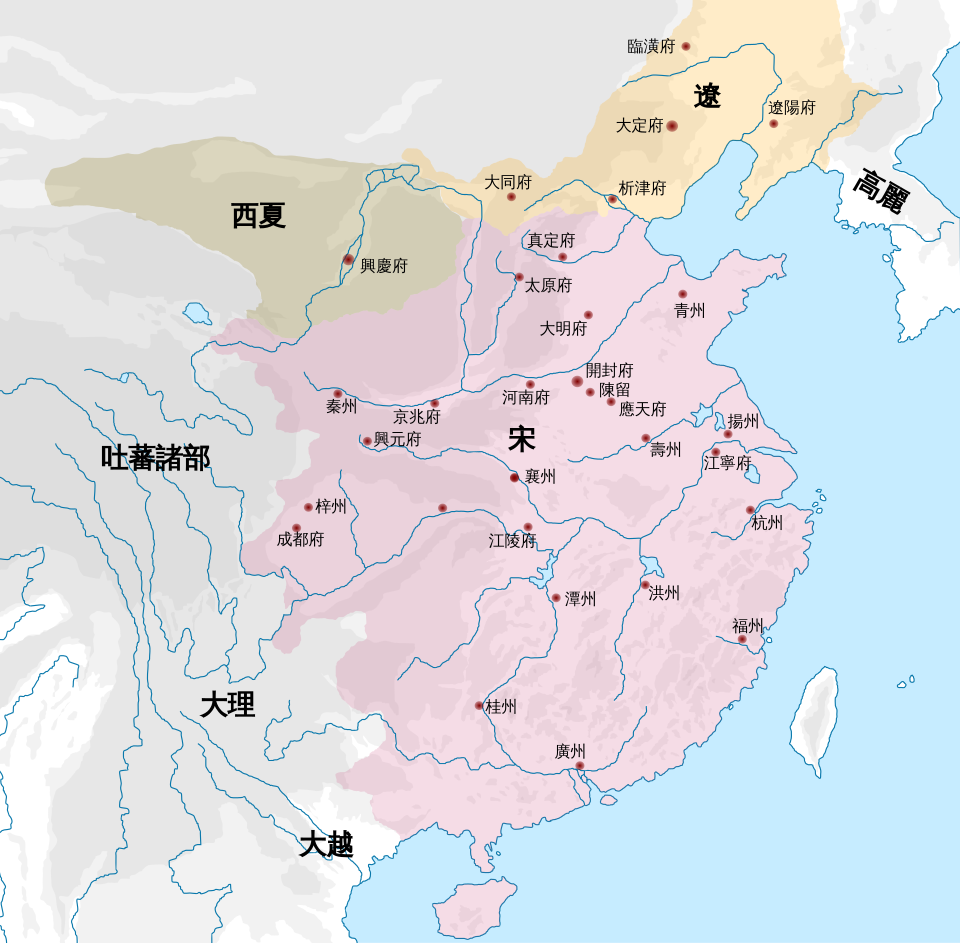
金代:山西全境归金Jin Dynasty: All of Shanxi under Jurchen Jin금대: 산시 전역이 금나라에
女真族灭辽灭北宋后,山西全境归金。设河东北路(治太原)、河东南路(治平阳/临汾)。大同仍为西京,延续了辽代的陪都地位。After the Jurchen Jin conquered both Liao and Northern Song, all of Shanxi came under Jin control. They established Hedong North Circuit (seat at Taiyuan) and Hedong South Circuit (seat at Pingyang/Linfen). Datong remained the Western Capital, continuing its secondary capital status from the Liao era.여진족이 요와 북송을 멸망시킨 후 산시 전역이 금나라에 귀속되었습니다. 하동북로(치소 타이위안)와 하동남로(치소 평양/린펀)를 설치했습니다. 다퉁은 여전히 서경으로, 요대의 배도 지위를 이어갔습니다.
九、元代"山西"之名诞生IX. Yuan DynastyBirth of the Name "Shanxi"九. 원대"산시"라는 이름의 탄생
中书省直辖Direct Rule under Zhongshu Province중서성 직할
元代山西属中书省直辖,设太原路、大同路、平阳路等。元代在此设立"河东山西道宣慰司","山西"作为行政区划名称开始出现。虽然"山西"这个地理概念早已有之(太行山以西),但作为正式行政名称,始于元代。In the Yuan dynasty, Shanxi was under the direct jurisdiction of Zhongshu Province, with Taiyuan Circuit, Datong Circuit, Pingyang Circuit, etc. The Yuan established the "Hedong-Shanxi Pacification Commission" — "Shanxi" first appeared as an official administrative name. While the geographic concept "west of the Taihang Mountains" existed long before, as a formal administrative name it dates from the Yuan.원대 산시는 중서성 직할로 태원로, 대동로, 평양로 등을 설치했습니다. 원은 "하동산서도선위사"를 설립하여 "산서(山西)"가 정식 행정구역 명칭으로 처음 등장했습니다. "산서"라는 지리적 개념(태항산 서쪽)은 오래전부터 있었지만, 정식 행정 명칭으로는 원대가 시초입니다.
十、明代省域确立与大槐树移民X. Ming DynastyProvince Boundaries Set & the Great Migration十. 명대성역 확립과 대회수 이민
山西布政使司:九府格局Shanxi Provincial Administration: Nine Prefectures산서포정사사: 구부(九府) 체제
明代设山西布政使司,下辖九府:太原府、平阳府(临汾)、大同府、潞安府(长治)、汾州府(汾阳)、泽州(晋城)、蒲州府(永济)、辽州(左权)、沁州(沁县)。这一格局基本确定了现代山西省的版图。The Ming established the Shanxi Provincial Administration Commission with nine prefectures: Taiyuan, Pingyang (Linfen), Datong, Lu'an (Changzhi), Fenzhou (Fenyang), Zezhou (Jincheng), Puzhou (Yongji), Liaozhou (Zuoquan), and Qinzhou (Qinxian). This framework essentially defined modern Shanxi's provincial borders.명대에 산서포정사사를 설치하여 9개 부를 관할했습니다: 태원부, 평양부(린펀), 대동부, 노안부(창즈), 분주부(분양), 택주(진청), 포주부(융지), 요주(좌권), 심주(심현). 이 체제가 현대 산시성의 판도를 기본적으로 확정했습니다.
⚔️ 大同镇:九边重镇⚔️ Datong Garrison: One of Nine Border Fortresses⚔️ 대동진: 구변(九邊) 중진
大同是明代"九边重镇"之一,驻扎重兵防御蒙古。大同的城墙、军堡体系在当时首屈一指。如今大同古城墙已经修复,是明代军事建筑的杰出代表。Datong was one of the Ming's "Nine Border Garrisons," heavily fortified against Mongol incursions. Datong's walls and military fortress system were among the finest of the era. The restored Datong city walls today are an outstanding example of Ming military architecture.다퉁은 명대 "구변중진" 중 하나로 몽골 방어를 위해 중병을 주둔시켰습니다. 다퉁의 성벽과 군보 체계는 당시 최고 수준이었으며, 현재 복원된 다퉁 고성벽은 명대 군사 건축의 뛰어난 대표작입니다.
🌳 洪洞大槐树移民🌳 Great Migration from Hongdong's Grand Pagoda Tree🌳 홍동 대회수 이민
明初为恢复因战乱荒废的中原地区,从山西向全国大规模移民。洪洞县广济寺大槐树下是集结出发地。"问我祖先在何处,山西洪洞大槐树"——这句话至今在华北各省广泛流传,是中国最大规模的有组织移民事件之一。In the early Ming, to repopulate the war-ravaged Central Plains, massive migrations were organized from Shanxi. The Great Pagoda Tree at Guangji Temple in Hongdong County was the gathering point. "Ask where our ancestors came from — the Great Pagoda Tree of Hongdong, Shanxi" — this saying still circulates widely across northern China. It was one of the largest organized migrations in Chinese history.명 초기 전란으로 황폐해진 중원 지역을 복원하기 위해 산시에서 전국으로 대규모 이민을 실시했습니다. 홍동현 광제사의 대회수 아래가 집결 출발지였습니다. "우리 조상이 어디에서 왔느냐 물으면, 산시 홍동 대회수" — 이 말은 지금도 화북 각 성에서 널리 전해지고 있습니다.
十一、清代晋商与票号天下XI. Qing DynastyShanxi Merchants & Banking Empire十一. 청대진상과 표호 천하
山西省:九府十六州Shanxi Province: Nine Prefectures, Sixteen Departments산시성: 구부십육주
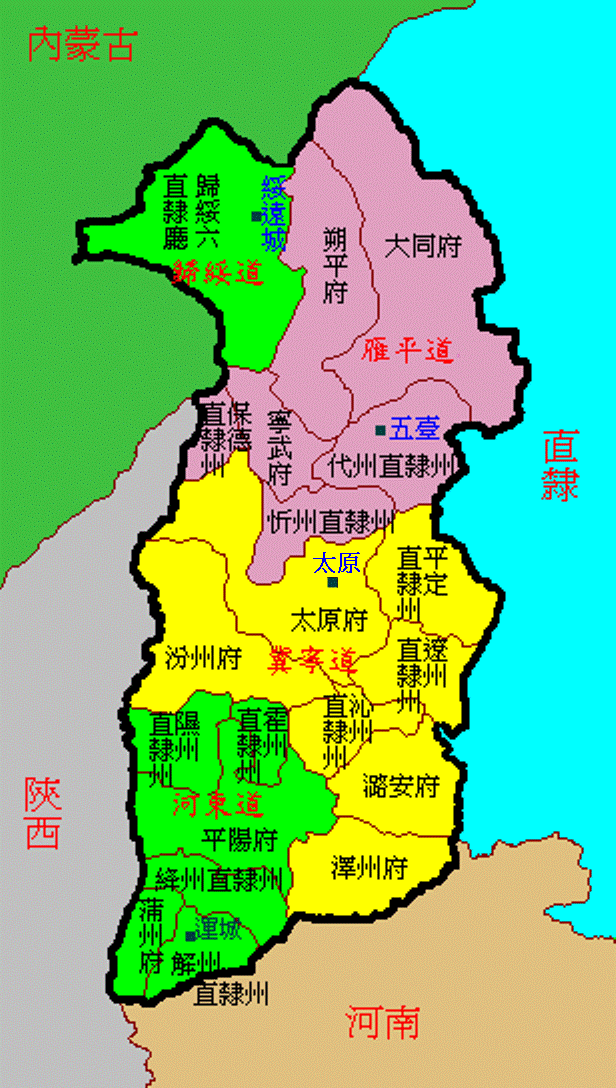
清代设山西省,省域与今天几乎完全一致。下辖九府十六州,行政体系更加完善。The Qing established Shanxi Province with boundaries nearly identical to today's. It administered nine prefectures and sixteen departments, with a more refined administrative system.청대에 산시성을 설치하여 성역이 오늘날과 거의 완전히 일치합니다. 구부십육주를 관할하며 행정 체계가 더욱 완비되었습니다.
💰 晋商崛起💰 Rise of Shanxi Merchants💰 진상의 부흥
清代晋商达到鼎盛。票号(中国最早的银行)遍布全国,平遥、太谷、祁县成为金融中心。日升昌票号(平遥)被誉为"中国银行业的鼻祖"。晋商的商业网络从蒙古草原到南洋,从日本到俄罗斯,堪称清代中国最有影响力的商帮。Shanxi merchants reached their zenith in the Qing dynasty. Their piaohao (draft banks — China's earliest banks) spread across the nation, with Pingyao, Taigu, and Qixian becoming financial centers. Rishengchang Bank (Pingyao) is called "the ancestor of Chinese banking." The Shanxi merchant network stretched from Mongolian grasslands to Southeast Asia, from Japan to Russia — arguably the most influential merchant guild of Qing China.청대에 진상이 전성기에 달했습니다. 표호(중국 최초의 은행)가 전국에 퍼졌으며, 핑야오, 타이구, 치현이 금융 중심지가 되었습니다. 일승창 표호(핑야오)는 "중국 은행업의 시조"라 불립니다. 진상의 상업 네트워크는 몽골 초원에서 남양까지, 일본에서 러시아까지 뻗어 청대 중국에서 가장 영향력 있는 상방이었습니다.
🐪 走西口🐪 "Going West through the Pass"🐪 주서구(走西口)
清代大量山西人通过杀虎口等关口向内蒙古迁移,开发包头、归化城(呼和浩特)等地。"走西口"是山西近代史上最重要的人口迁移事件,深刻影响了内蒙古的开发和晋蒙文化交流。During the Qing, large numbers of Shanxi people migrated to Inner Mongolia through passes like Shahukou, developing Baotou, Guihua (Hohhot), and other areas. "Going West through the Pass" was the most important migration event in modern Shanxi history, profoundly impacting Inner Mongolia's development and Shanxi-Mongolia cultural exchange.청대에 다수의 산시인이 살호구 등 관문을 통해 내몽골로 이주하여 바오터우, 귀화성(후허하오터) 등지를 개발했습니다. "주서구"는 산시 근대사에서 가장 중요한 인구 이동 사건으로, 내몽골 개발과 진몽 문화 교류에 깊은 영향을 미쳤습니다.
十二、民国至今从四道到十一市XII. Republic to PresentFrom Four Circuits to Eleven Cities十二. 민국~현재사도에서 십일시까지
民国初:四道体制Early Republic: Four Circuits민국 초: 사도 체제
民国初年山西设四道:雁平道、冀宁道、河东道、归绥道。其中归绥道后划归内蒙古(今呼和浩特一带),这是山西省域近代以来唯一一次较大的调整。In the early Republic, Shanxi had four circuits: Yanping, Jining, Hedong, and Guisui. The Guisui Circuit was later assigned to Inner Mongolia (modern Hohhot area) — the only major modern adjustment to Shanxi's borders.민국 초기 산시에 4개 도를 설치했습니다: 안평도, 기녕도, 하동도, 귀수도. 그 중 귀수도는 나중에 내몽골(현 후허하오터 일대)에 편입되었으며, 이것이 산시 성역의 근대 이후 유일한 대규모 조정입니다.
阎锡山治晋(1911-1949)Yan Xishan's Rule (1911-1949)옌시산의 산시 통치 (1911-1949)
阎锡山统治山西38年,山西在这一时期相对独立、相对稳定。他推行"山西模式",发展工业和教育,修建铁路(同蒲铁路使用窄轨,有军事防御考量)。太原兵工厂一度是中国最大的兵工厂之一。Yan Xishan governed Shanxi for 38 years, during which the province was relatively independent and stable. He promoted the "Shanxi Model," developing industry and education, and building railways (the Tongpu Railway used narrow gauge for military defense considerations). Taiyuan Arsenal was once one of China's largest.옌시산이 38년간 산시를 통치하면서 비교적 독립적이고 안정적인 시기를 보냈습니다. "산시 모델"을 추진하여 공업과 교육을 발전시키고 철도를 건설했습니다(동포철도는 군사 방어를 고려해 협궤 사용). 타이위안 병공창은 한때 중국 최대 병공창 중 하나였습니다.
1949年至今:11个地级市1949 to Present: 11 Prefecture-Level Cities1949년~현재: 11개 지급시
1949年后,山西逐步形成今天11个地级市的格局:
太原、大同、阳泉、长治、晋城、朔州、晋中、运城、临汾、忻州、吕梁
每一个城市的名字背后,都有几千年的历史沉淀。After 1949, Shanxi gradually formed today's 11 prefecture-level cities:
Taiyuan, Datong, Yangquan, Changzhi, Jincheng, Shuozhou, Jinzhong, Yuncheng, Linfen, Xinzhou, Lüliang
Behind every city name lies thousands of years of historical depth.1949년 이후 산시는 점차 오늘날의 11개 지급시 체제를 형성했습니다:
타이위안, 다퉁, 양취안, 창즈, 진청, 숴저우, 진중, 윈청, 린펀, 신저우, 뤼량
모든 도시 이름 뒤에는 수천 년의 역사가 쌓여 있습니다.
现代城市历代名称对照Historical Names of Modern Cities현대 도시 역대 명칭 대조
| 现代城市Modern City현대 도시 | 上古Ancient상고 | 春秋战国Spring-Autumn/Warring춘추전국 | 秦汉Qin-Han진한 | 北魏N. Wei북위 | 隋唐Sui-Tang수당 | 宋金Song-Jin송금 | 明清Ming-Qing명청 |
|---|---|---|---|---|---|---|---|
| 太原Taiyuan타이위안 | — | 晋阳(赵)Jinyang (Zhao)진양(조) | 太原郡/并州Taiyuan/Bingzhou태원군/병주 | 并州Bingzhou병주 | 北都太原府Northern Capital북도 태원부 | 太原府Taiyuan Pref.태원부 | 太原府Taiyuan Pref.태원부 |
| 大同Datong다퉁 | — | 代国State of Dai대국 | 雁门郡/代郡Yanmen/Dai안문군/대군 | 平城(都城)Pingcheng (capital)평성(수도) | 云州Yunzhou운주 | 西京大同府Western Capital서경 대동부 | 大同府Datong Pref.대동부 |
| 运城Yuncheng윈청 | 蒲坂/安邑Puban/Anyi포판/안읍 | 魏国本土Wei homeland위 본토 | 河东郡Hedong하동군 | 河东郡Hedong하동군 | 蒲州/河中府Puzhou/Hezhong포주/하중부 | 河中府Hezhong Pref.하중부 | 蒲州府/解州Puzhou/Jiezhou포주부/해주 |
| 临汾Linfen린펀 | 平阳Pingyang평양 | 晋国核心区域Jin core region진 핵심 지역 | 平阳郡Pingyang평양군 | 平阳郡Pingyang평양군 | 晋州/平阳Jinzhou/Pingyang진주/평양 | 平阳府Pingyang Pref.평양부 | 平阳府Pingyang Pref.평양부 |
| 长治Changzhi창즈 | — | 韩·上党Han · Shangdang한·상당 | 上党郡Shangdang상당군 | 上党郡Shangdang상당군 | 潞州Luzhou노주 | 潞州Luzhou노주 | 潞安府Lu'an Pref.노안부 |
| 晋城Jincheng진청 | — | 韩·上党Han · Shangdang한·상당 | 上党郡(南)Shangdang (S)상당군(남) | — | 泽州Zezhou택주 | 泽州Zezhou택주 | 泽州府Zezhou Pref.택주부 |
| 忻州Xinzhou신저우 | — | 晋国State of Jin진국 | 定襄郡Dingxiang정양군 | 秀容Xiurong수용 | 忻州Xinzhou흔주 | 忻州Xinzhou흔주 | 忻州Xinzhou흔주 |
| 朔州Shuozhou숴저우 | — | 赵国State of Zhao조국 | 雁门郡(西)Yanmen (W)안문군(서) | 朔州Shuozhou삭주 | 朔州Shuozhou삭주 | 朔州Shuozhou삭주 | 朔平府Shuoping Pref.삭평부 |
| 吕梁Lüliang뤼량 | — | 赵/魏Zhao/Wei조/위 | 西河郡Xihe서하군 | 离石Lishi이석 | 石州Shizhou석주 | 石州Shizhou석주 | 汾州府(部分)Fenzhou (part)분주부(일부) |
| 阳泉Yangquan양취안 | — | 赵国State of Zhao조국 | 上党郡(北)Shangdang (N)상당군(북) | — | 平定Pingding평정 | 平定Pingding평정 | 平定州Pingding Dept.평정주 |
| 晋中Jinzhong진중 | — | 晋国State of Jin진국 | 太原郡(南)Taiyuan (S)태원군(남) | — | 太谷/祁县Taigu/Qixian태곡/기현 | 太原府(南)Taiyuan (S)태원부(남) | 太原府(南)Taiyuan (S)태원부(남) |
🏔️ 为什么山西的省域这么稳定?🏔️ Why Are Shanxi's Borders So Stable?🏔️ 왜 산시의 성역은 이렇게 안정적인가?
在中国所有省份中,山西的省域是最稳定的之一。从秦汉设郡到今天,核心区域几乎没变过。原因在于山西是一个天然的地理单元,像一个巨大的"口"字形盆地:Among all Chinese provinces, Shanxi has one of the most stable borders. From the Qin-Han commanderies to today, the core area has barely changed. This is because Shanxi is a natural geographic unit — like a giant rectangular basin:중국 모든 성 중에서 산시의 성역은 가장 안정적인 것 중 하나입니다. 진한 시대 군 설치부터 오늘날까지 핵심 지역이 거의 변하지 않았습니다. 이는 산시가 거대한 '口'자형 분지와 같은 천연 지리 단위이기 때문입니다:
- 东:太行山 — 与河北、河南的天然分界East: Taihang Mountains — natural boundary with Hebei and Henan동: 태항산 — 허베이·허난과의 천연 경계
- 西:黄河 — 与陕西的天然分界West: Yellow River — natural boundary with Shaanxi서: 황하 — 산시(陝西)와의 천연 경계
- 北:长城/阴山 — 与内蒙古的分界North: Great Wall / Yin Mountains — boundary with Inner Mongolia북: 장성/음산 — 내몽골과의 경계
- 南:中条山/黄河 — 与河南的分界South: Zhongtiao Mountains / Yellow River — boundary with Henan남: 중조산/황하 — 허난과의 경계
这种四面环山、一河穿流的地形,使山西成为中国行政区划史上最"天然"的省份。两千多年来,无论朝代如何更迭,山西的核心版图始终如一。This terrain — surrounded by mountains on all sides with a river flowing through — makes Shanxi the most "natural" province in Chinese administrative history. For over two millennia, regardless of dynastic changes, Shanxi's core territory has remained the same.이러한 사면이 산으로 둘러싸이고 강이 흐르는 지형은 산시를 중국 행정구역사에서 가장 "천연적인" 성으로 만들었습니다. 2천여 년 동안 왕조가 어떻게 바뀌든 산시의 핵심 판도는 한결같았습니다.